
A Code of the West for Animals
It’s election year. We are exposed to more than the usual palaver about cowboy ethics, particularly the Code of the West. I am braced for politicians in cowboy hats, local worthies in rodeo parades, and rhetoric about the uniqueness of Wyoming values.
Don’t get me wrong: ranching is tough. As a pathologist who cut up his share of cattle and horses to establish why they died, I saw the grim side of commercial ranching. It’s the stuff of long winters, dry summers, unpredictable markets, and price fixing by the Big 4 packing companies. Wyoming’s family ranches are truly distinct from those of gentleman owners who are late of Wall Street, Silicon Valley, Florida, and North Carolina.
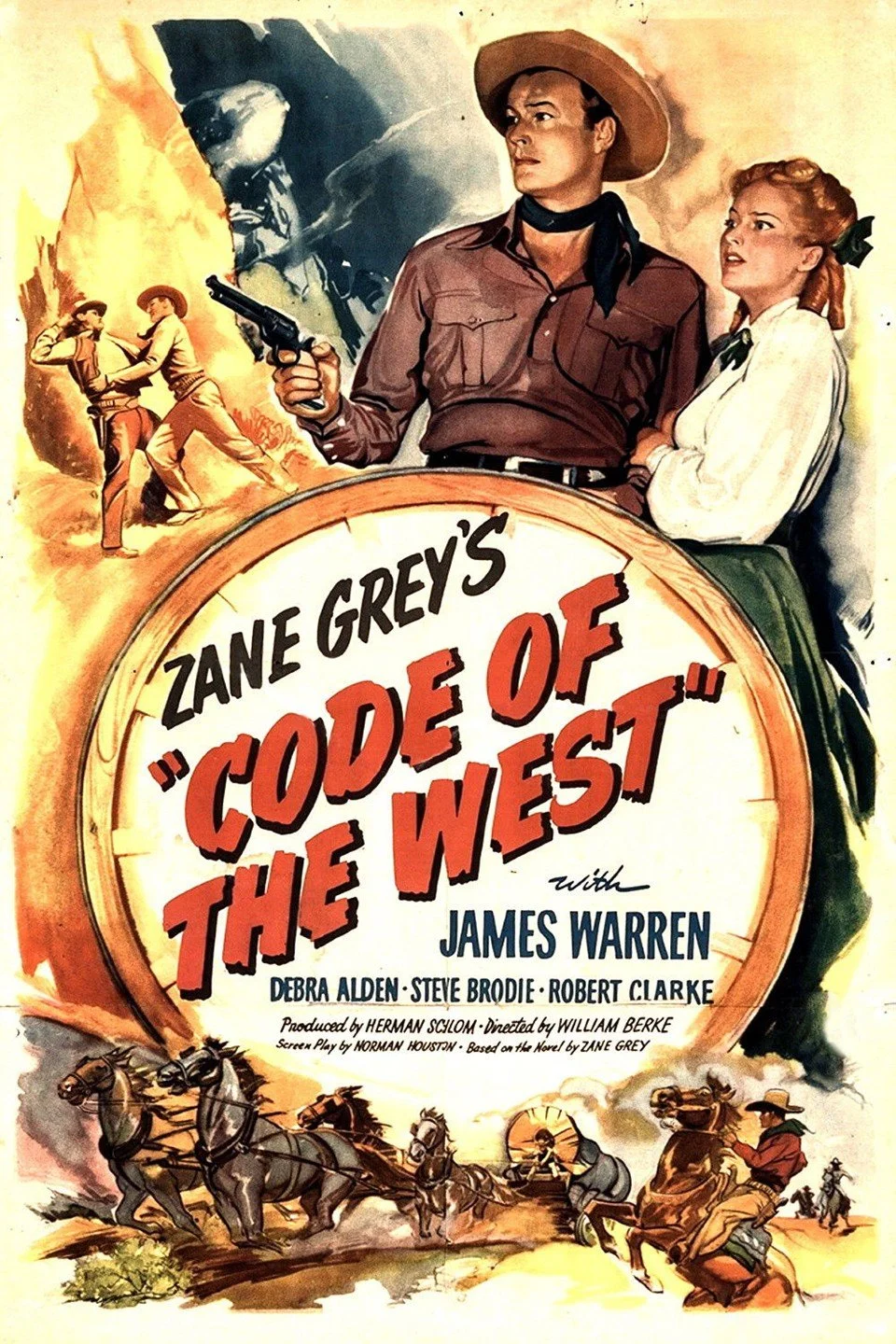
Poster for the big-screen adaptation of Zane Grey’s Code of the West. Image via Rotten Tomatoes.
But here's the thing about the Code of the West. When I ask who originated the code, I get blank looks. A typical response is: "Well, I don't know the fellow's name, but I assume it was written around the time we settled the West." That's partly right. Cowboys and ranchers of the 1870s and '80s had expectations about keeping your word and sticking by your outfit, but nobody wrote them down as a formal code. That job fell to novelists like Owen Wister and Zane Grey, whose 1934 novel was titled The Code of the West, and to Hollywood after them. The ten-point list that became our state's official code of behavior is far more recent.
That list is the work of James P. Owen. His 2004 book Cowboy Ethics: What Wall Street Can Learn from the Code of the West boiled the old frontier ethos down to ten tidy principles and was an unexpected bestseller. Wyoming's legislators liked it enough to adopt his version as the state code. Owen founded the Center for Cowboy Ethics and Leadership. He doesn't live in Wyoming.
There is nothing wrong with Owen’s version of the code. But its roots are Wild West shows, Hollywood cowboy movies, paperback westerns, and schlock like Gunsmoke. A mythical past beats the real thing every time.
Besides, facing each day with courage, putting in an honest day’s work, and keeping your word are commendable. None is uniquely Western. It is how most people wish their friends, family, and neighbors to behave.
It’s the “ride for the brand” slogan that gives me pause. Consider the source. Powerful people expect unquestioned loyalty from underlings. Chances were never big that Owen would advise employees to stand by their fellow workers when conditions were poor and wages a pittance.
And the code omits something. Nowhere does it mention animals. Yet cowboys rode horses, used ranch dogs to move livestock, encountered wildlife daily, and hunted for meat. They were nearly as immersed in the natural world, albeit transformed by barbed wire and Eastern capital, as our native peoples. You can tell a lot about a man by seeing how he treats his dog.
My read of the typical ranch hand in 1870s and ‘80s departs from Owen’s. The real deal was a young, often a Confederate veteran from a modest farming or working-class background, a bachelor, poorly paid, in a tough line of work. A quote from the Cheyenne Leader gives a sense of cowboys’ social standing in the eyes of respectable citizens in 1882: “Morally, as a class, [cowboys] are foulmouthed, blasphemous, drunken, lecherous, [and] utterly corrupt.” For backup, I give you the take of dean of Western historians, Wallace Stegner: “The cowboy in practice was and is an overworked, underpaid hireling, almost as homeless and dispossessed as a modern crop worker… His fabled independence was and is chiefly the privilege of quitting his job, in order to find another just as bad.”
If ranch hands could save a small stash, buy a place and run some cattle, they were resented as homesteaders, bullied and occasionally murdered by the established stockgrowers. Hence the Johnson County cattle war, the dynamiting of sheep flocks, the Cheyenne Club, and assassins like Tom Horn.
In the absence of a code that speaks to how Wyomingites might interact with livestock, wildlife, and companion animals, I played with possible takes on the enshrined cowboy code: care for critters in your life; respect their intelligence and dignity; show compassion in the hunt, and when animals are hauled for slaughter.
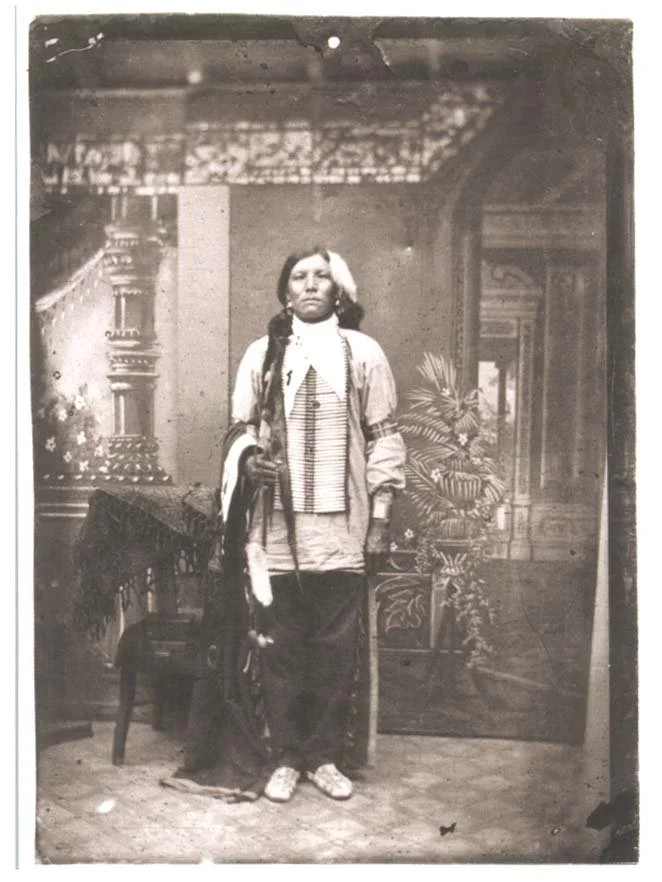
Alleged photo of Crazy Horse in 1877. The authenticity of the photo is disputed. Image via Wikimedia Commons.
Perhaps we should listen to another voice. Toward the end of his long life, a member of the Oglala Lakota named He Dog (ca. 1840–1936) dictated a biography of Crazy Horse (Tȟašúŋke Witkó; His-Horse-Is-Crazy). Crazy Horse was a son of the Black Hills. He died while a captive by the U.S. Army in Fort Robinson. When told he would be shipped to Omaha and onward to Florida, a scuffle broke out. Crazy Horse was bayonetted in the back by an Irish trooper from Co. Tyrone, (a county where I once worked as a food animal veterinarian). A stone marker outside the reconstructed guardhouse at Fort Robinson memorializes the tragedy.
In The Killing of Chief Crazy Horse, Chief He Dog outlined the four traits expected in people who aspired to lead the Oglala. In his opinion, Crazy Horse exemplified all of them. They were bravery, including willingness to speak up; ambition; honesty; and kindness to all creatures.
I wonder how long it will be before the last of these, empathy toward all animals, will be properly embedded in Wyoming’s animal abuse statutes. Or even Code of the West!
