

WYCAP Latest News

Dam Good Work: WYCAP Teams Up for Wyoming's Beavers
Research shows that beaver activity can increase water retention by hundreds of millions of cubic feet of water in a single watershed, reducing flooding and creating natural fire and drought resistance. The benefits of beavers to landowners and agricultural producers, hunters, anglers, recreationalists, wildlife advocates, and all water users across society are innumerable.
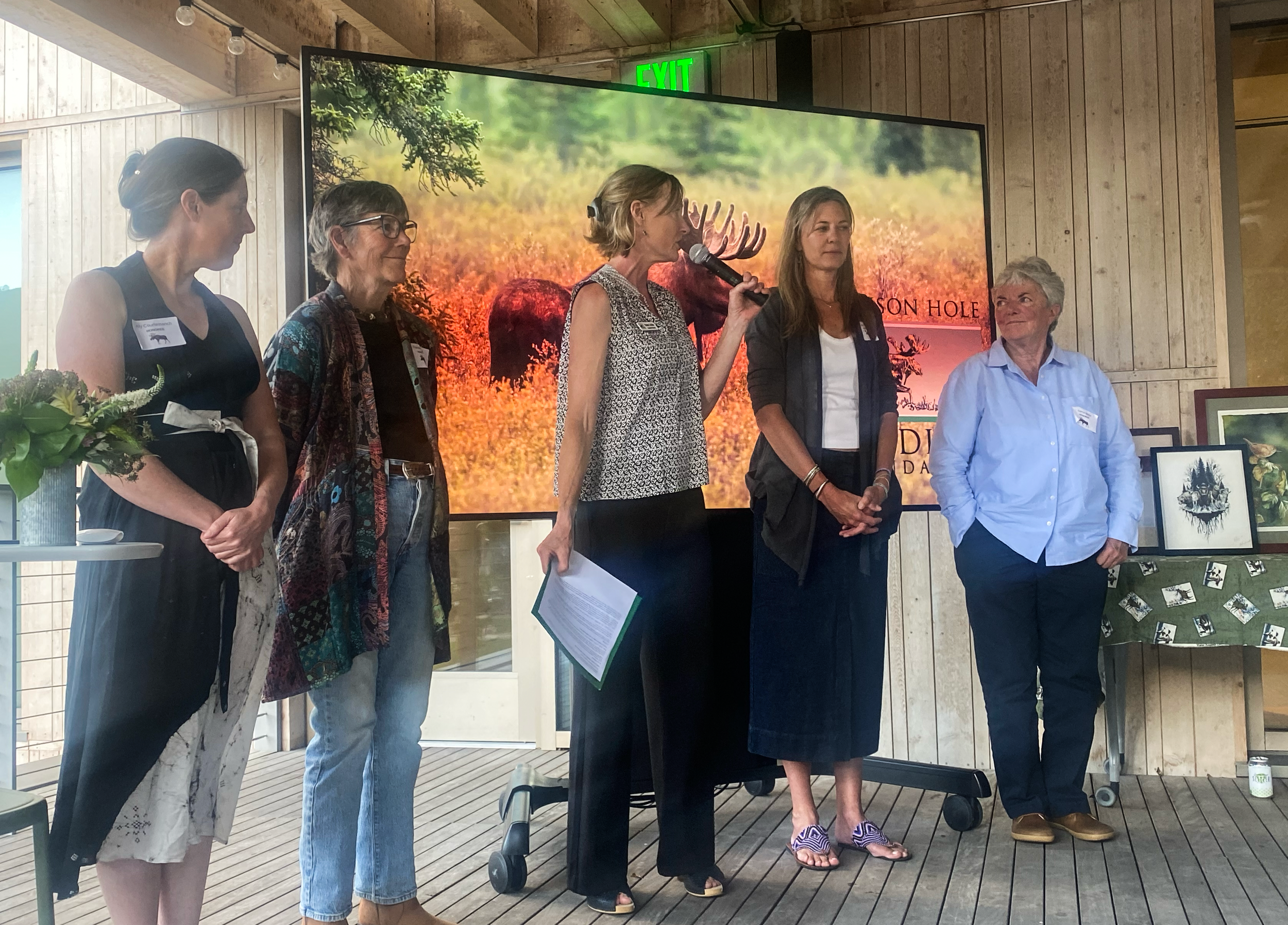
Celebrating Women Who Lead in the Wild: Jackson Hole Wildlife Foundation Honors Four Conservation Trailblazers
On the evening of August 18, the rooftop deck of the Jackson Hole History Museum filled with conservationists, volunteers, and community members for the Jackson Hole Wildlife Foundation's annual Leaders in the Wild event. Guests enjoyed hors d'oeuvres and drinks with a view over Jackson. The evening honored women whose work is shaping the future of wildlife conservation in the Greater Yellowstone Ecosystem.

On Mardy's Front Porch: Miriam Horn Brings the Story of George Schaller Home to the Murie Ranch
On August 11, 2026, people (and one very well-behaved puppy named Bella) gathered on the historic front porch of the Murie Ranch in Grand Teton National Park. They came to hear author Miriam Horn talk about legendary field biologist George Schaller. The evening was part of Teton Science Schools' Murie Ranch Front Porch Series, presented in partnership with the Grand Teton National Park Foundation.

A Fed Bear Is a Dead Bear: Why Keeping Wildlife Wild Matters More Than Ever This Fall
On September 11, 2026, Grand Teton National Park staff euthanized a black bear near Delta Lake, one of the park's most popular backcountry destinations. The bear had not attacked anyone, in fact it had nothing wrong. It died because people gave it human food.
Park officials were blunt about who was responsible: this bear was lethally removed because of poor decisions made by park visitors.

A Code of the West for Animals
Here's the thing about the Code of the West. When I ask who originated the code, I get blank looks. A typical response is: "Well, I don't know the fellow's name, but I assume it was written around the time we settled the West." That's partly right. Cowboys and ranchers of the 1870s and '80s had expectations about keeping your word and sticking by your outfit, but nobody wrote them down as a formal code. That job fell to novelists like Owen Wister and Zane Grey, whose 1934 novel was titled The Code of the West, and to Hollywood after them. The ten-point list that became our state's official code of behavior is far more recent.

Cyanide on the Landscape: the M-44 is Back
It’s not smart to leave cyanide lying about on public land. Cyanide is a potent toxin that, in small amounts (i.e., <1 g), causes lightheadedness, giddiness and rapid breathing, progressing to stupor, spasms, convulsions, and death. Symptoms of acute sodium cyanide poisoning develop rapidly. A published study conducted by personnel from the U.S. Fish and Wildlife Service in the 1980s used M-44 devices (see below) and penned dogs and coyotes to establish a timeline. Symptoms develop at 32 seconds of exposure. Animals are dead within two minutes.

Understanding Wyoming's 2026 Wolf Hunt: A Population at the Federal Floor
Wyoming's 2026 Trophy Zone wolf hunting quota was cut by 50%, from 44 tags down to 22. That decision was driven by an event most Wyomingites probably didn't hear much about: a severe disease outbreak that reshaped the wolf population in ways the state's usual harvest calculations don't typically account for. Here's what happened, how the state is responding, and why WYCAP believes more protection is still needed.

Changing Cultural Norms and Attitudes: Our Recent Outreach Efforts
“You know, looking at your pull-up posters really makes me uneasy. When I asked myself why, I realized it was because I had no idea about any of these awful animal cruelty cases. Thanks for educating me and for what you do”. It was one of many similar comments I received recently while staffing a booth at the annual meeting of The Wildlife Society in Sheridan, Wyoming.

A Good Bullet Should Kill Just Once
Hundreds of peer-reviewed scientific articles exist on the impacts on wildlife of lead poisoning from lead-based bullets, lead shot, and fishing tackle. The insidious, long-term impacts of lead poisoning have been known for centuries. Lead in paint and children’s toys has been regulated in the U.S. for years. But lead ammunition and tackle remain largely unregulated. Lead poisoning was first identified as a disease in wild birds in an 1842.