Celebrating Women Who Lead in the Wild: Jackson Hole Wildlife Foundation Honors Four Conservation Trailblazers
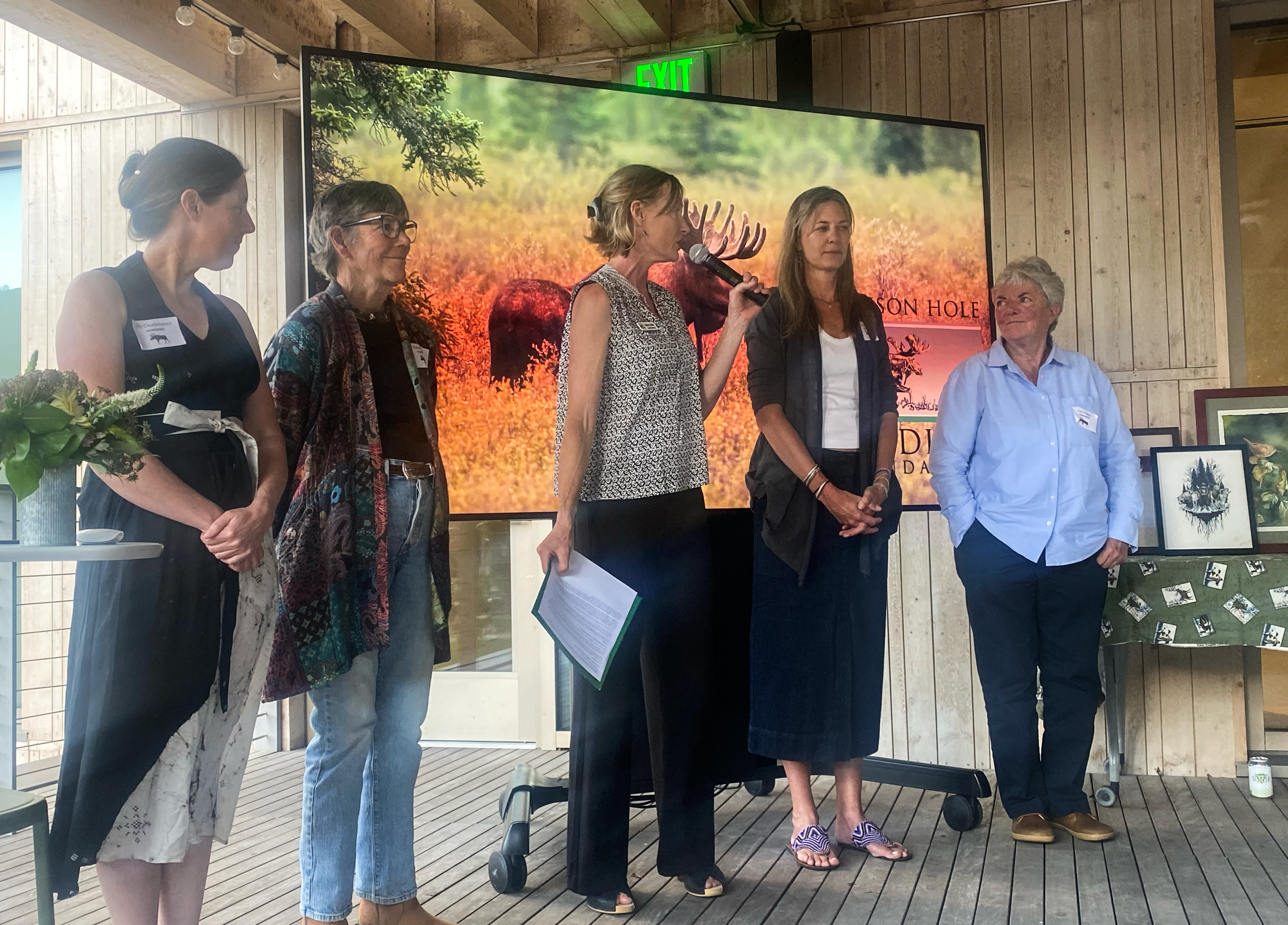
On the evening of August 18, 2026, the rooftop deck of the Jackson Hole History Museum filled with conservationists, volunteers, and community members for the Jackson Hole Wildlife Foundation's (JHWF) annual Leaders in the Wild event. Guests enjoyed hors d'oeuvres and drinks with a view over Jackson. The evening honored women whose work is shaping the future of wildlife conservation in the Greater Yellowstone Ecosystem (GYE).
The evening balanced celebration with inspiration. JHWF Executive Director Renee Seidler and foundation leadership welcomed attendees before turning the spotlight to this year's honorees. A keynote presentation by wildlife cinematographer Jocelyn Stokes followed.
Honoring Four Leaders
This year's honorees each represent a different part of conservation in Jackson Hole: founding vision, community involvement, state wildlife science, and federal wildlife management. Together, they show how lasting conservation is built.
Lorna Miller helped plant the seeds of JHWF itself. She co-founded the foundation in 1993, when it began as a local effort to address wildlife safety issues such as highway collisions and migration barriers. More than three decades later, it has grown into a volunteer-driven organization whose programs reach nearly every corner of the valley.
Frances Clark made sure those seeds grew roots. A longtime volunteer and community science advocate, Frances has been a leader with Nature Mapping Jackson Hole. This JHWF program invites residents to record wildlife observations and contribute real data to conservation decisions. Her work shows that anyone, not just professional biologists, can play a meaningful role in protecting wildlife.
Aly Courtemanch has spent 13 years as a wildlife biologist with the Wyoming Game and Fish Department, with a particular focus on bighorn sheep. These iconic mountain dwellers face ongoing pressure from disease, habitat loss, and human disturbance, and Aly's work helps keep them part of the region's landscape. She has also given back to the community outside her official role, including service as president of JHWF's Board of Directors.
Kate Wilmot has worked on the front lines of human-wildlife coexistence as a Bear Management Specialist with the National Park Service in Grand Teton National Park. In one of the most heavily visited landscapes in the country, Kate works to keep both people and bears safe. Her mission aligns closely with JHWF's Bear Wise program, which helps residents and visitors prevent conflicts with bears.
Keynote: Jocelyn Stokes and In Her Nature
The evening's special presentation came from wildlife cinematographer Jocelyn Stokes. She is part of the award-winning, all-female team behind In Her Nature, a PBS Nature series about women protecting wildlife in some of the world's most challenging habitats. Her stories ranged from Madagascar to Nepal, showing that the challenges facing wildlife abroad echo those we know well at home.
In Madagascar, Stokes documented efforts to protect six critically endangered lemur species, including the greater bamboo lemur, which was recently thought to be extinct. Conservation work there includes planting native tree species, training local residents as rangers who record field data in a mobile app, and promoting agroforestry that supports livelihoods without deforestation. Organizers even created lemur storybooks in the local language to inspire the next generation. The greater bamboo lemur population has grown from roughly 100 to 1,000 animals.
In southern Madagascar, she shared the story of the radiated tortoise, a species devastated by the illegal pet trade. Working with the Turtle Survival Alliance, local communities raise tortoises for up to 15 years before releasing them into the wild. Around 1,000 have been returned. Because residents are invested in raising them, not a single released tortoise has gone missing.
In Nepal, Stokes introduced guests to Doma Paudel, the subject of "The Rhino Whisperer." After losing her mother to a rhino attack, Doma became Nepal's first female nature guide and dedicated herself to protecting the wildlife that shaped her life. Conservation efforts she has championed have helped triple Nepal's rhino population and increase its tiger numbers. Today, she teaches communities how to avoid and survive rhino encounters, from climbing trees to striking the ground with sticks. Her rallying cry, "Ladies Power," resonated throughout the room.
Stokes drew clear parallels to Jackson Hole. Like Madagascar and Nepal, our valley is home to large and sometimes dangerous wildlife, including wolves and grizzly bears, and it supports an economy built on ecotourism. Here, too, conservation succeeds when local communities are engaged, informed, and invested.
Why This Event Matters
Leaders in the Wild is more than an awards evening. It is a reminder that conservation in the Greater Yellowstone Ecosystem depends on people. Founders bring vision, volunteers show up year after year, scientists dedicate their careers to understanding wildlife, and managers handle the daily realities of people and animals sharing the same landscape.
By honoring women in these roles, the event recognizes contributions that have too often gone unacknowledged. It also shows young people, especially girls, what a career or a lifetime of service in conservation can look like. Throughout the night, speakers celebrated curiosity, courage, and a good sense of humor, the same qualities the next generation of wildlife leaders will need.
Wyoming faces growing development pressure, increasing visitation, and a changing climate, so the work of leaders like Lorna, Frances, Aly, and Kate matters more than ever. Their examples, along with the global stories Jocelyn Stokes shared, show that wildlife thrives when communities invest in it.
Learn more about the Jackson Hole Wildlife Foundation and its programs at jhwildlife.org. Learn more about Jocelyn Stokes's work at jocelynstokes.com.