Journaling prompts for the Wolf Moon: Reclaiming the Wild, the Dark, and the True
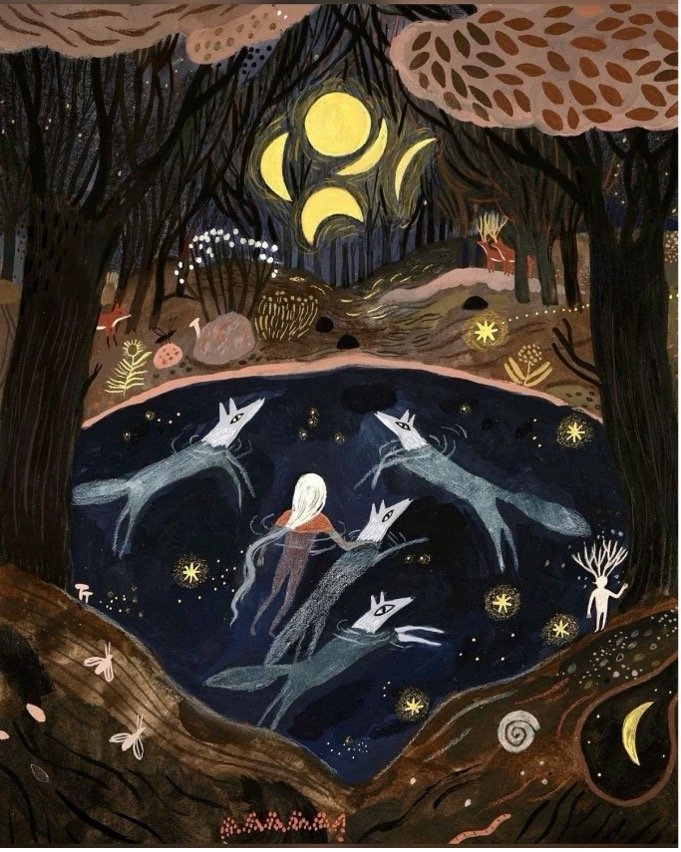
Tijana Lukovic
The Wolf Moon rises in the deep of winter, when the land is stripped back to bone and breath fogs the air. Sap runs inward and life listens closely to itself.
This moon has long been burdened with fear. Wolves, after all, have been cast as villains- devourers, threats, monsters of the margins. Shadows pacing just beyond the village fire. Teeth in the dark. Hunger with a face.
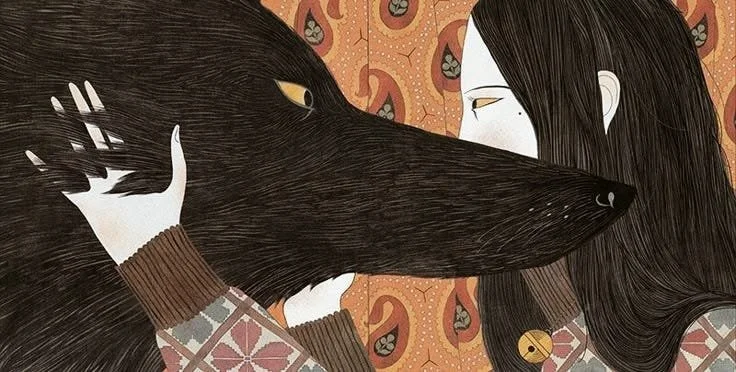
Júlia Sardà
And yet. This fear has never belonged to the wolf.
Wolves are not cruel. They are intelligent, devoted, clean, deeply relational beings. They live by cooperation, not domination. They raise their young collectively, with tenderness and fierce attentiveness. They grieve their dead. They play; rolling, chasing, teasing one another into laughter we do not know how to hear. They groom one another. They share food, they care for the old and injured. They teach the young how to move through the world with precision and respect. They know when to hunt, and when to rest. When to act, and when to wait.
A wolf lives within a precise and ancient economy of life. They take what they need and no more, moving with an intelligence shaped by land, season, and kin. They hunt not from cruelty or excess, but from necessity, and when the hunt is done, they rest. They do not abandon their own, but remain woven into the life of the pack—attentive to the young still learning the world, and to the old whose bodies now carry wisdom more than speed.
What we have feared in the wolf has never been their nature, but their refusal to bend themselves to our ways of seeing.
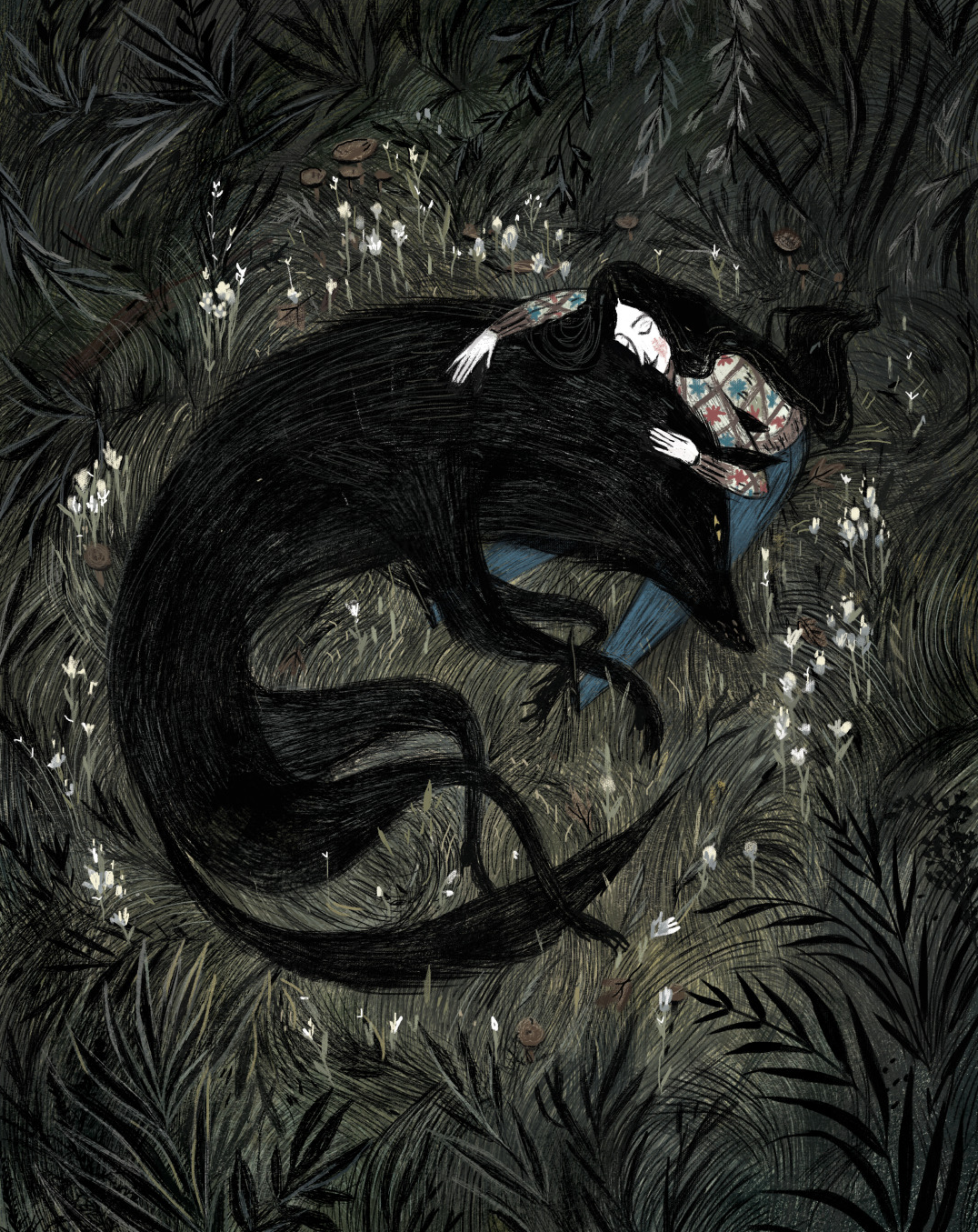
Júlia Sardà
The stories we have told about wolves have always been stories about wildness—about that which lives beyond ownership and instruction, that which does not recognise fences as truth or permission as necessary. They are stories shaped by discomfort with ways of living that move through relationship rather than rule, through cooperation rather than command, through listening rather than obedience.
In these stories, loyalty to kin became suspect, instinct was framed as recklessness, and the deep, embodied intelligence of the body was cast as something needing correction or control. Cultures that learned to fear what they could not dominate began to paint the wild as dangerous, the dark as something to be distrusted, and the instinctive as shameful.
And so the wolf was made monstrous, not because of who they are, but because of what they mirror back to us: a way of being that remembers belonging, honours limits, and lives in conversation with life rather than above it.
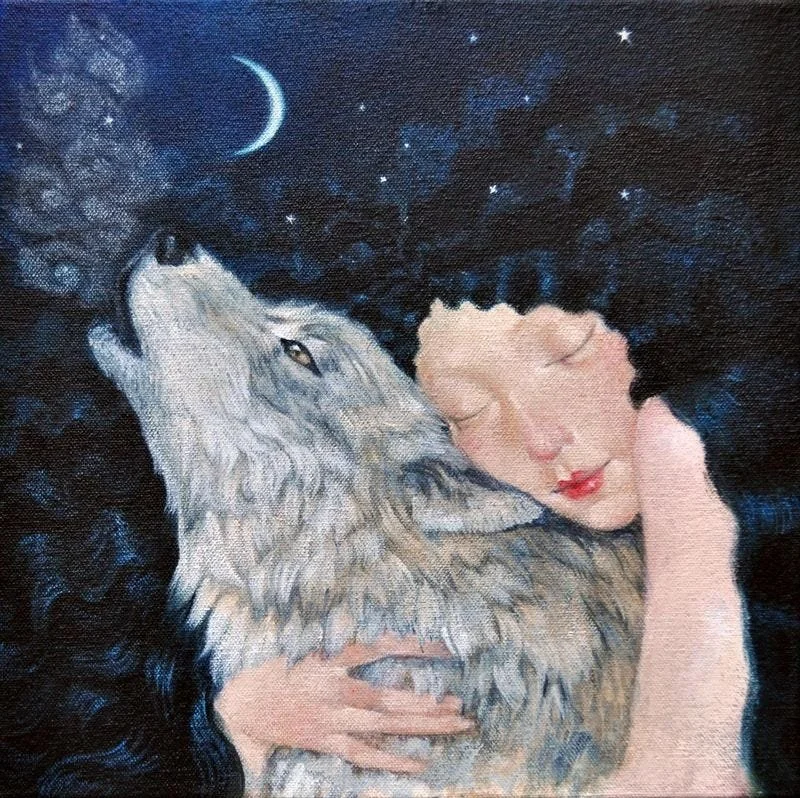
Lucy Campbell
The feminine, especially in her untamed, sensing, sexual, grieving, furious forms, became something to tame, silence, or exile.
The wolf carries all of this projection.
As does the forest. The night. The winter. The body that feels too much. The woman who will not soften herself to be palatable. The grief that refuses to hurry. The anger that knows its own intelligence.
This moon asks us to look again.
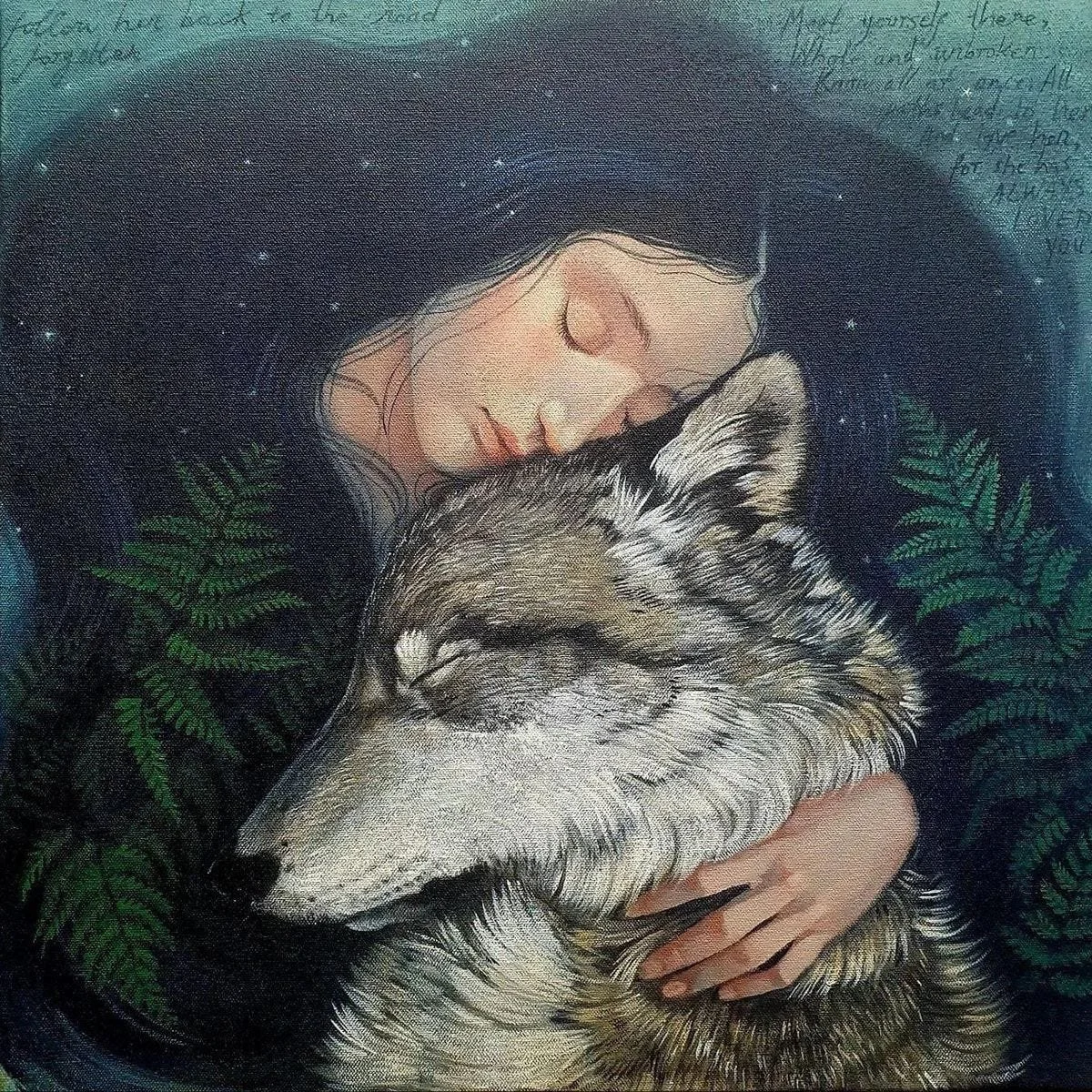
Lucy Campbell
To notice where wildness has been misunderstood, outside us and within us. To notice where we have inherited stories that taught us to fear our own instincts, our hunger, our darkness, our deep attachments and loyalties. It asks us to remember that wild does not mean chaotic. That dark does not mean destructive. That instinct does not mean unkind.
Under the Wolf Moon, we are invited to begin telling truer stories, about wolves, about wildness, about ourselves.
They are stories that remember belonging as something lived rather than earned, stories that honour kinship not as sentiment, but as a deep, ongoing responsibility to one another and to the living world. They are stories that trust the intelligence of the pack, the body, and the land itself, recognising that wisdom does not only arrive through thought, but through scent, rhythm, memory, and movement.
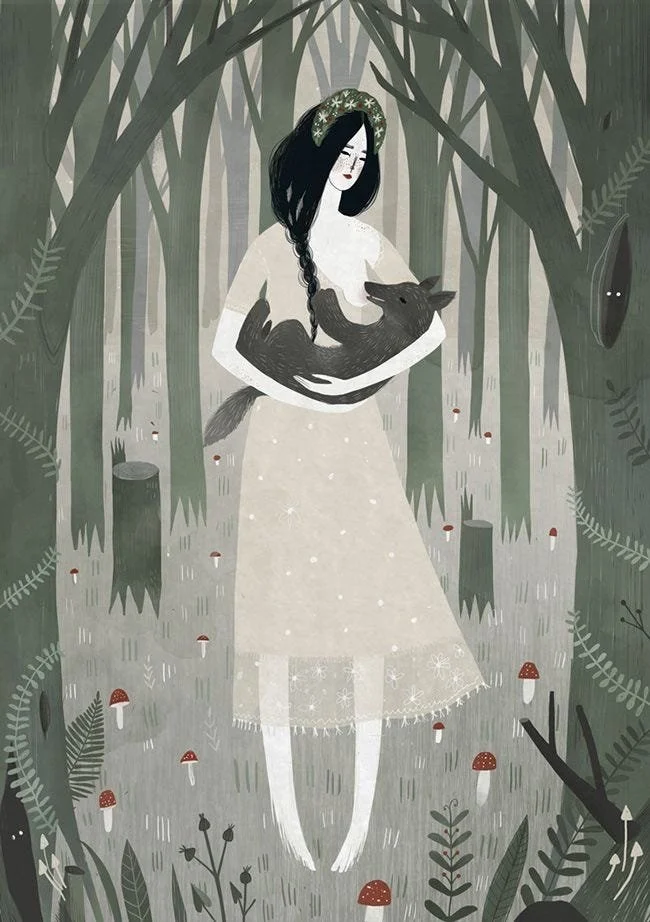
Alexandra Dvornikova
In these stories, the howl is no longer heard as threat or violence, but as a call, an announcement of presence, a way of locating one another across distance and dark, a voice that says I am here, and so are you.
This is a moon for reclaiming what was never wrong, only misunderstood, for standing at the edge of the fire and listening at last to what has been calling us home for far longer than we have been willing to hear.